


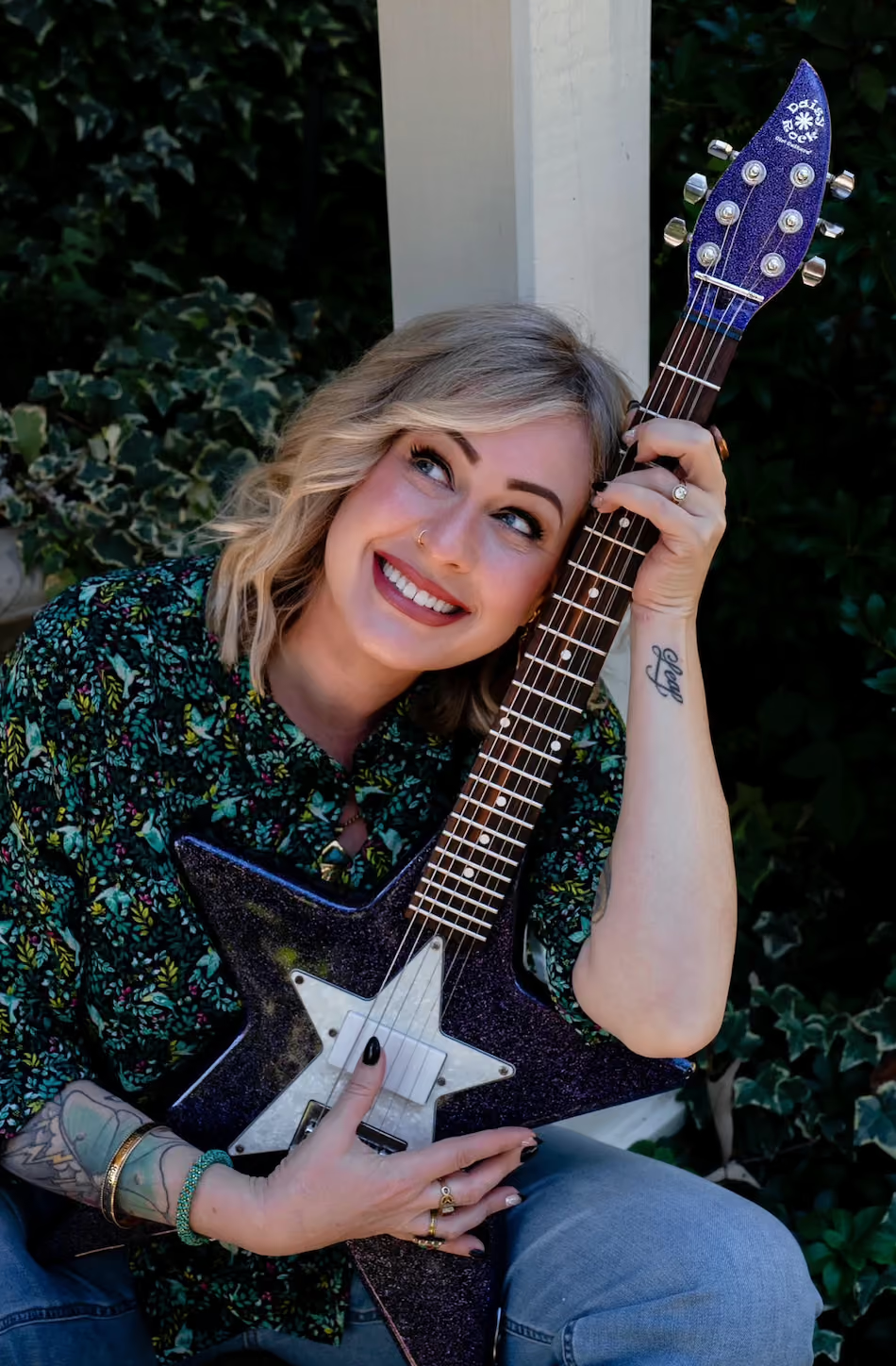
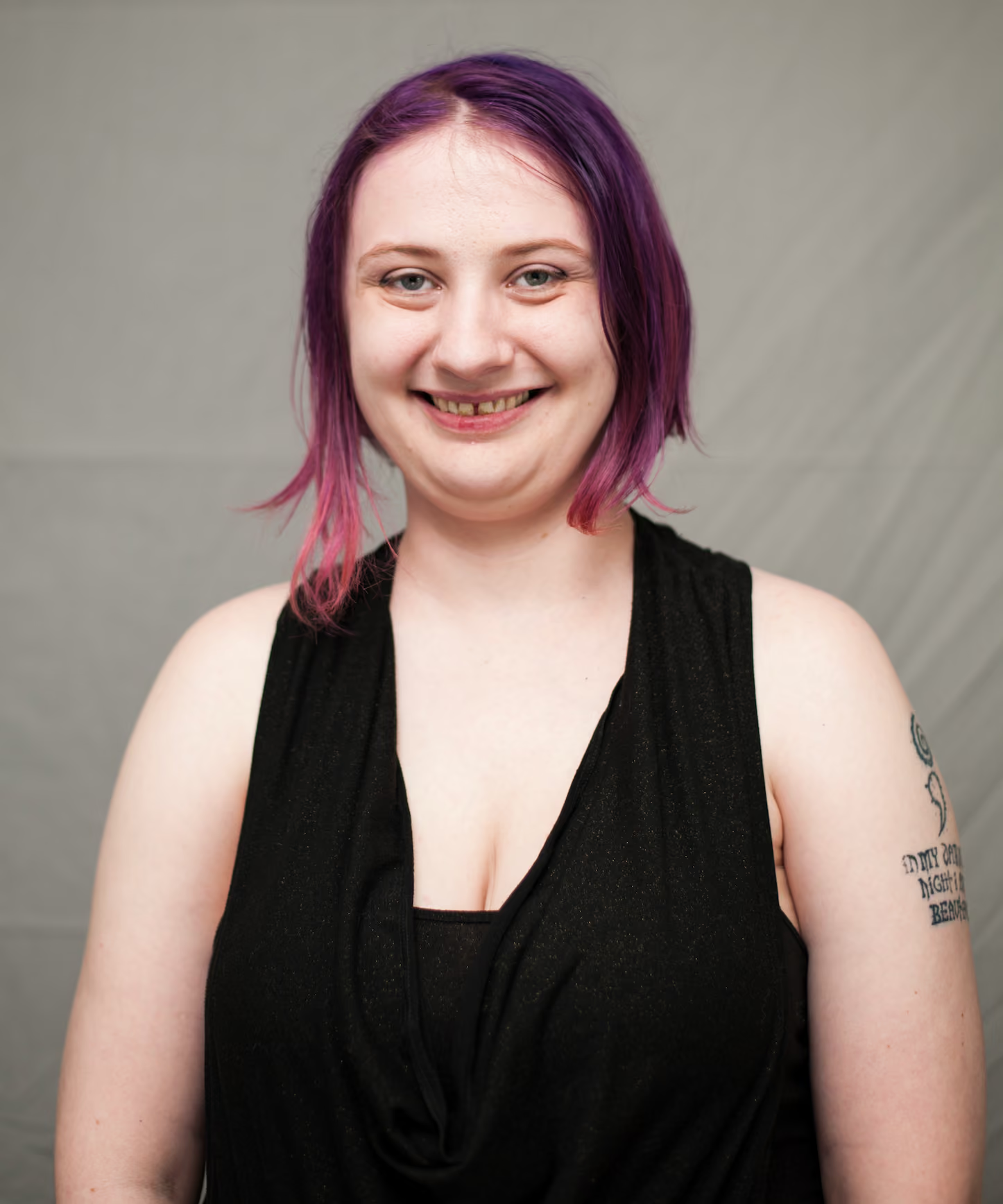
Genevieve LeDoux shares her story
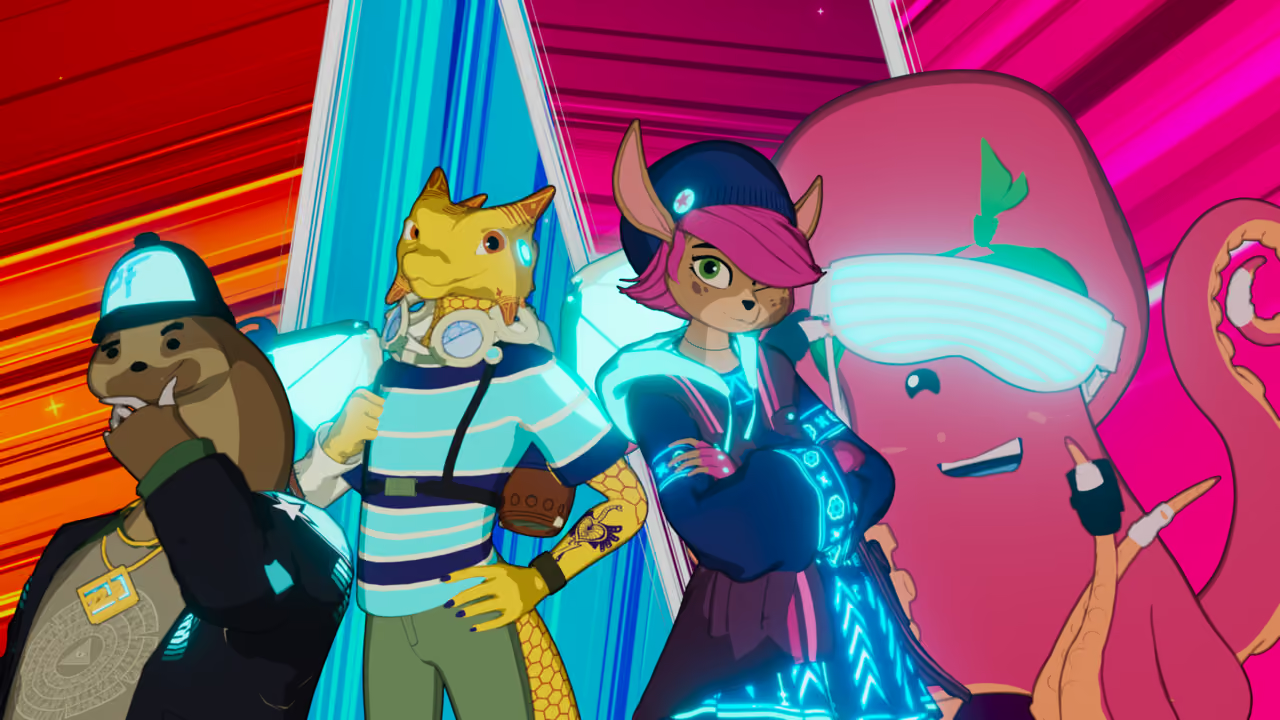
We sat down with Genevieve to learn more about her inspiration for Star Forest, and how it relates to her experience as a late-diagnosed neurodivergent parent to neurodivergent kids. Her story is inspiring and energizing. Enjoy!
You’ve shared that Star Forest was inspired by your own late AuDHD diagnosis and your children’s experiences. How did that journey of discovery shape your creative path?
My late diagnosis was like suddenly getting the user manual for my own brain. For years, I’d been creating and problem-solving in ways that felt natural to me but often seemed “too much” or “not quite right” to others and there was a constant grip of overwhelm. When I finally understood I was AuDHD, it reframed everything—not as struggles to overcome—but as a different operating system that needed the right environment to thrive. Watching my children navigate their own neurodivergent experiences, I realized how desperately we needed media that celebrated these differences rather than pathologized them. Star Forest became the world I wished had existed for all of us.
What first inspired you to turn your love of music and art into an animated, story-driven band for kids?
Music has always been my primary language. Music and writing are how I process emotion, regulate my nervous system, and connect with others. Animation adds another layer of sensory richness and storytelling possibility. I wanted to create something that engaged multiple senses and learning styles simultaneously, because that’s how many neurodivergent kids (and adults) experience the world. A band format felt natural because it’s inherently about collaboration, individual voices coming together, and the idea that different instruments/perspectives create something more beautiful together.
When you first began developing Star Forest, did you imagine it would grow into the vibrant, multidimensional project it is today?
Honestly? No and yes. It started as a creative impulse, a way to process my own experiences and create something meaningful for my kids. But as I dove deeper, I realized this wasn’t just a personal project, it was filling a genuine void in media. The more I developed the characters, the music, the world-building, the more it demanded to become something bigger. Each layer revealed another possibility: artists who believed in it, community who showed up, songs that sprung up from inside me. It’s grown organically in response to what neurodivergent families are telling me they need and a calling to stay curious.
What were some of the early challenges you faced in bringing this neuroaffirming idea to life?
The biggest challenge was explaining a concept that didn’t really exist yet in the market. “Neurosparkly animated band” doesn’t fit neatly into existing categories, which made it hard to find collaborators who understood the vision. I also struggled with the executive function demands of entrepreneurship. The administrative, business, and marketing side don’t come naturally to my brain. And, there’s the constant tension between wanting to create something commercially viable and refusing to compromise on the real heart of the project. I had to learn to advocate for why this matters, even when others couldn’t immediately see it. I just know when people find it, they will not only see it as quality, but feel it’s just for them.
How does your experience as a neurodivergent creator shape the way you approach storytelling and collaboration?
I think in systems, patterns, and connections that others might not immediately see. This means I can build rich, layered worlds with internal consistency and meaningful symbolism. I’m also deeply attentive to sensory details (how something sounds, feels, moves) because that’s how I experience stories. In collaboration, I’ve learned to be explicit about my communication needs after years of feeling frustrated and insecure that I wasn’t coming across the right way. I also bring intense focus and pattern recognition to problem-solving, which helps when we hit creative roadblocks. My literal thinking actually helps in animation and music production where precision matters. My right brain is quite adept at making quick creative decisions and I can brainstorm with the best of them!
What strengths do you think your AuDHD brings to your work in creative projects like Star Forest?
Hyperfocus is a superpower when channeled correctly. I can dive deep into complex creative problems and emerge with solutions others might miss. My ADHD brings energy, ideation, and the ability to make unexpected connections between concepts. The autistic side brings systematic thinking, attention to detail, pattern recognition, and deep commitment to authenticity. I have strong pattern recognition that helps with music composition and world-building. I’m also deeply empathetic in a specific way. I may not always read social cues in the moment, but I can intellectually understand and represent diverse emotional experiences in storytelling. And, my own struggles with executive function make me hyper-aware of how to design systems and stories that work WITH neurodivergent brains, not against them!
Play Star Forest Flow Fi and get into your own hyperfocused groove!
What aspects of professional or creative life are more challenging for you, and how do you work through them?
Executive function tasks like email management, scheduling, financial tracking, and administrative work are genuinely very difficult. I use external systems heavily: calendars with multiple reminders, project management tools, accountability partners, and delegation when budget allows. Context-switching is brutal for me, so I try to batch similar tasks together. Social-professional networking is empowering and exhausting at the same time - the small talk, the self-promotion, the “reading the room,” but I also genuinely love people so I’ve had to find alternative ways to build connections, often through my work speaking for itself or through written communication where I can edit and refine. Rejection sensitivity around the business side can be paralyzing, so I’ve learned to separate “this pitch didn’t work” from “I am a failure.” And I have to constantly monitor for burnout because my natural tendency is to hyperfocus way past my limits. Sleep has never been a priority. I am very productive. But I also inherently know it’s not sustainable.
How do you sustain creativity and flow amid the everyday realities of deadlines, sensory load, or executive function demands?
I’ve learned that creativity isn’t about waiting for inspiration—it’s about creating conditions where flow becomes possible. That means: managing my sensory environment (white noise, lighting control, comfortable clothing), protecting my energy (saying no to non-essential demands), and having rituals that signal to my brain “now we create” (specific music, movement breaks, I have a copper cup I drink from that means “it’s time to work”). I’ve also accepted that some days I’m in maintenance mode, not creation mode, and that’s okay. I keep a backlog of smaller, less cognitively demanding tasks for low-energy days. And I’ve built time with my kids and being outside together into my schedule as a non-negotiable, not a reward for productivity.
On building neuroaffirming community
Star Forest was born from both personal and family experiences. How have your children influenced the stories, sounds, or characters in the project?
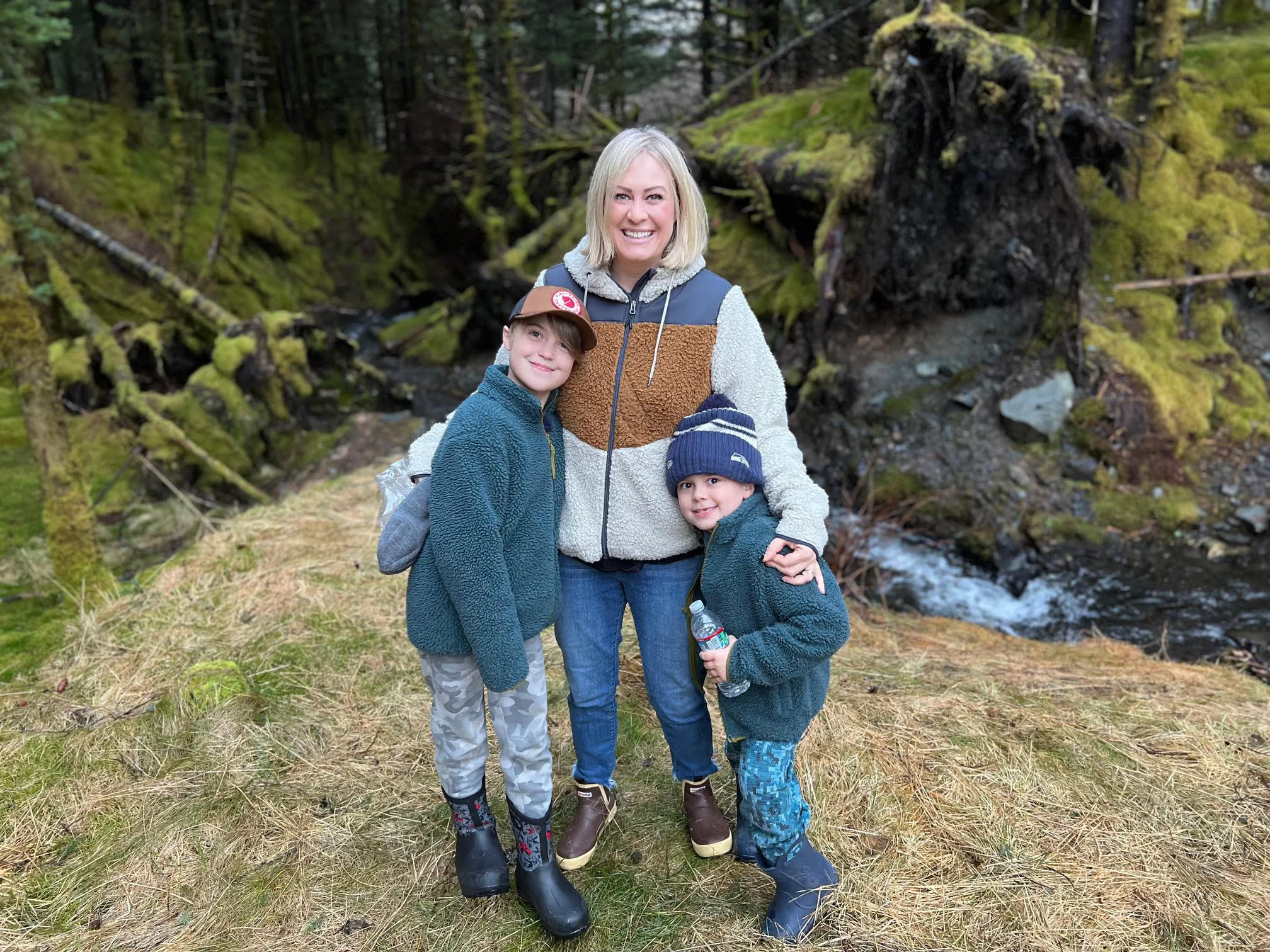
My children are my primary research team and honest critics! Their questions, their concerns, their joy; all of it feeds directly into Star Forest. They’ve helped me understand what resonates with kids versus what adults think should resonate. Their sensory preferences inform the soundscapes and visual design. Their struggles with social situations, executive function, and emotional regulation show up in the characters’ journeys. They’ve also taught me that kids don’t need stories to be simple or sanitized - they need them to be true. When they see themselves reflected in these characters, when they tell me “That’s just like me,” I know we’re on the right track. My youngest son Dempsey was outside with me and saw an inchworm. His next question delighted me. “Is there a two-inch worm? I like to measure 2x2?” He then helped me create one of our characters, Twig’s sidekick, Twinch. A two-inch worm that helps Twig measure when he was building. Dempsey lit up when he saw that idea had become real on our YouTube channel.
Collaboration seems central to Star Forest. What has it been like to work with musicians, animators, and educators to build this world?
It’s been both challenging and deeply rewarding. I’ve had to learn how to communicate my vision clearly while remaining open to others’ expertise and creative contributions. Finding collaborators who genuinely understand neurodivergence—not just as a buzzword but as a foundational philosophy—has been crucial. The best collaborations happen when people bring their own lived experiences and perspectives to the table. I’ve learned to be explicit about my communication needs upfront, which actually makes collaboration smoother. And I’ve found that when I’m working with people who share the mission, the work becomes a form of collective care and activism. The most important thing is that I’ve developed an innate sense of responsibility to the vision. I had to communicate my vision effectively. Without that, I believe you just won’t get it done.
Have you found communities—online or in person—where you feel especially supported and understood as a neurodivergent creator?
Besides following and supporting influencers on the social platforms, the fans of Star Forest have become a community. Their feedback and stories keep me going when things feel difficult.
What kind of feedback have you received from parents, educators, or neurodivergent families who have discovered Star Forest?
The feedback that matters most is when people see themselves in these characters. I’ve heard from neurodivergent adults who wish they’d had this representation as kids. Parents have shared that the music helps with transitions or regulation. Fans appreciate the stories go beyond “tolerance” into genuine celebration of difference. The most moving feedback is when fans tell us Star Forest feels like belonging.
How do you see projects like yours helping to build understanding and empathy between kids with different neurotypes?
Stories are how we build empathy. When neurotypical kids see neurodivergent characters as heroes, friends, and fully realized people with rich inner lives, it normalizes neurological difference. When neurodivergent kids see themselves reflected positively, it builds self-advocacy and pride. Star Forest doesn’t position neurodivergence as something to overcome or fix—it shows different ways of being in the world as equally valid and valuable. By making the content engaging and beautiful, we attract diverse audiences who might not have sought out “educational content about neurodiversity” but end up learning and growing anyway. We’re building a shared cultural reference point where neurodiversity is just part of the forest.
Work and life as a neurodivergent creator
What does a typical day look like for you as you balance creative direction, animation, music production, and family life?
“Typical” is a generous word! Ha! My days are highly structured yet need to remain flexible - which sounds contradictory but is very AuDHD. I protect my deep creative work for times when I have the most cognitive capacity, usually after the kids have gone to bed. Music production requires flow state, so I block time for that when I’m least likely to be interrupted. Usually in bursts of time late at night. Animation and visual work happens in focused sprints. Family life is woven throughout because my kids are part of this story: their feedback, their experiences, their perspectives inform everything. I use a lot of timers, body doubling (co-working with my assistant), and external accountability structures. And I’ve learned to recognize when I’m hitting capacity and need to step back before burnout hits. A find a lot of neurodivergent people (and all humans) are not spending enough time in the wild. Being in nature is a huge component of resetting from our complete overload. And it’s a huge part of the ethos of Star Forest.
What helps you maintain focus and balance while managing creative projects and daily life as a neurodivergent artist?
Routine and flexibility need to coexist, which sounds impossible but works for me. I have consistent structures (morning routines, work blocks, shutdown rituals) but remain flexible within them. External accountability; body doubling, deadlines from collaborators, public commitments, etc. keeps me on track when internal motivation wavers. I’ve learned to work with my ultradian rhythms rather than fighting them: focused work sprints followed by genuine breaks. Physical movement is non-negotiable - it regulates my nervous system and often unlocks creative solutions. And I’ve had to give myself permission to work in ways that look different from “professional norms” but actually produce better results.
On more difficult or overstimulating days, what helps you recharge or find calm?
Sensory retreat is essential: dim lighting, familiar music or shows, or loud white noise. Sometimes I need to move (walk, dance, stim freely), sometimes I need to be completely still. I’ve learned that pushing through doesn’t work - I need to honor what my nervous system is telling me. Creative play with no outcome pressure can be restorative: doodling, improvising music, rearranging spaces. Connection with my kids or trusted friends (on my terms, not forced socializing) can help. And sometimes I just need to let myself be “unproductive” without guilt, trusting that rest is what will ultimately allow me to create again. It's definitely hard as a mom and when I ignore the signals I usually end up getting sick.
Are there particular strategies, accommodations, or tools that have made a big difference in your creative flow?
Project management tools that externalize my working memory (I use Notion, Frame.io, Google Drive and Slack). Time-blocking and visual schedules. Written communication when possible, so I can process and respond thoughtfully. Clear briefs and expectations from collaborators. The ability to work asynchronously rather than in real-time meetings when possible. Voice memos for capturing ideas before they disappear. And honestly, understanding that my brain works differently has been the biggest accommodation - it’s allowed me to stop fighting my neurology and start designing systems that work with it.
Can you share a time when self-advocacy or self-understanding changed how you approached your work or collaboration?
After diagnosis, I started explicitly telling collaborators: “I need to follow written briefs, I process better with advance notice, I might need clarifying questions that seem obvious, and I work in intensive sprints rather than steady daily output.” At first I worried this would make me seem difficult or unprofessional. Instead, collaborators appreciated the clarity. They knew what to expect and how to work with me effectively. One animator told me it actually made the collaboration smoother because there were no unspoken expectations or confusion. Self-understanding also changed how I structure my own workload. I stopped trying to work 9:00 am to 5:00 pm and started scheduling around my natural energy patterns. The work got better, and I stopped burning out constantly. Ninety percent of my team is neurodivergent and that helps tremendously.
What would you say to educators or parents who want to foster creativity and flow in neurodivergent children?
Focus on removing barriers rather than fixing the child. Ask what they need rather than assuming. Understand that what looks like “not trying” might be executive dysfunction, sensory overload, or unclear expectations. Create space for special interests - they’re not distractions, they’re often the portal to engagement and learning. Allow for different forms of creative expression and different timelines for completing work. Celebrate process, not just product. Model that mistakes are part of creating. Provide sensory accommodations without making kids feel “other” for needing them. And most importantly: presume competence. Neurodivergent kids are listening to what you believe about them, and they’ll internalize it.
Fostering neurodivergent representation in the media
What are some of the biggest misconceptions you encounter about AuDHD or neurodivergent creativity?
The misconception that late diagnosis means it wasn’t “real” or wasn’t affecting me all along. I just didn’t have language for my experiences.
How do you feel neurodivergent people—especially women and parents—are represented in the media today?
We’re largely invisible, or when we are shown, it’s through a very narrow lens. Neurodivergent women in media are often either the quirky manic pixie dream girl or completely absent. Neurodivergent parents are rarely shown at all, as if neurodivergence and parenthood are incompatible. When autism appears in parenting contexts, it’s usually as something happening TO the parent (having an autistic child) rather than the parent themselves being autistic. ADHD in women is often played for laughs or shown as just being “scatterbrained” rather than a complex neurological difference. We need more representation of neurodivergent people as fully realized characters living complete lives: parenting, creating, working, loving, struggling, thriving.
In your view, what does authentic neurodivergent representation look like, and how does Star Forest contribute to that?
Star Forest contributes by centering neurodivergent experiences in the narrative itself: characters who stim, who have sensory needs, who think differently, who need accommodations, who also have adventures and friendships and creativity and agency. The characters aren’t trying to become “normal,” they’re learning to understand themselves and find environments where they can thrive.

If you could shift one major societal perception about neurodivergent people, what would it be and why?
More than anything, I’d want society to understand that we don’t need to be “fixed” or made “normal.” We need environments, systems, and communities that work with our neurology rather than against it. When you remove barriers and provide appropriate support, neurodivergent people don’t just survive, we thrive and contribute in unique and valuable ways.
Looking ahead, what are your hopes for the future of neuroaffirming media and creative education?
I hope we reach a point where neuroaffirming content isn’t niche or special interest, it’s just considered good, inclusive storytelling. I hope neurodivergent creators are not just welcomed but actively sought out and compensated fairly for our expertise. I hope educational spaces recognize that there are many valid ways to learn, create, and demonstrate knowledge.
What advice would you give to other late-diagnosed neurodivergent creators who want to share their stories through art or media?
Your point of view matters. Your lived experience is valuable. Don’t wait until you’ve “figured it all out” to start creating! The process of creating IS part of figuring it out. Build systems that work with your brain, not against it. Find your people. Community and collaboration can sustain you when things get hard. Be honest about your access needs, even when it feels vulnerable. Your story will resonate with people who need to hear it, even if it doesn’t resonate with everyone. And remember that representation isn’t just for kids. Other adults need to see themselves in stories too. Start small if you need to, but start. We need your voice.
Is there anything else you’d like to share about Star Forest or your personal journey that we haven’t touched on?
Star Forest is deeply personal, but it’s not just about me or even just about my kids. It’s about building the world we needed and making sure it exists for the next generation. This work has been healing for me; reclaiming creativity as something joyful rather than fraught, understanding my own neurodivergence through the characters I create, connecting with families who get it. I’ve learned that making space for neurodivergent stories isn’t just representation work, it’s world-building work. Every time someone tells me their child saw themselves in a Star Forest character, it reminds me why this matters. We’re not just making content—we’re creating cultural touchstones that say “you belong, exactly as you are and wow, you are magical.”
How to Stream Star Forest
Ready to enter the Star Forest universe? You can download and stream tunes on YouTube, Spotify, Amazon Music, or any major streaming service.
You can also find Genevieve and Star Forest on TikTok and Instagram.
.svg)


